
Reviews
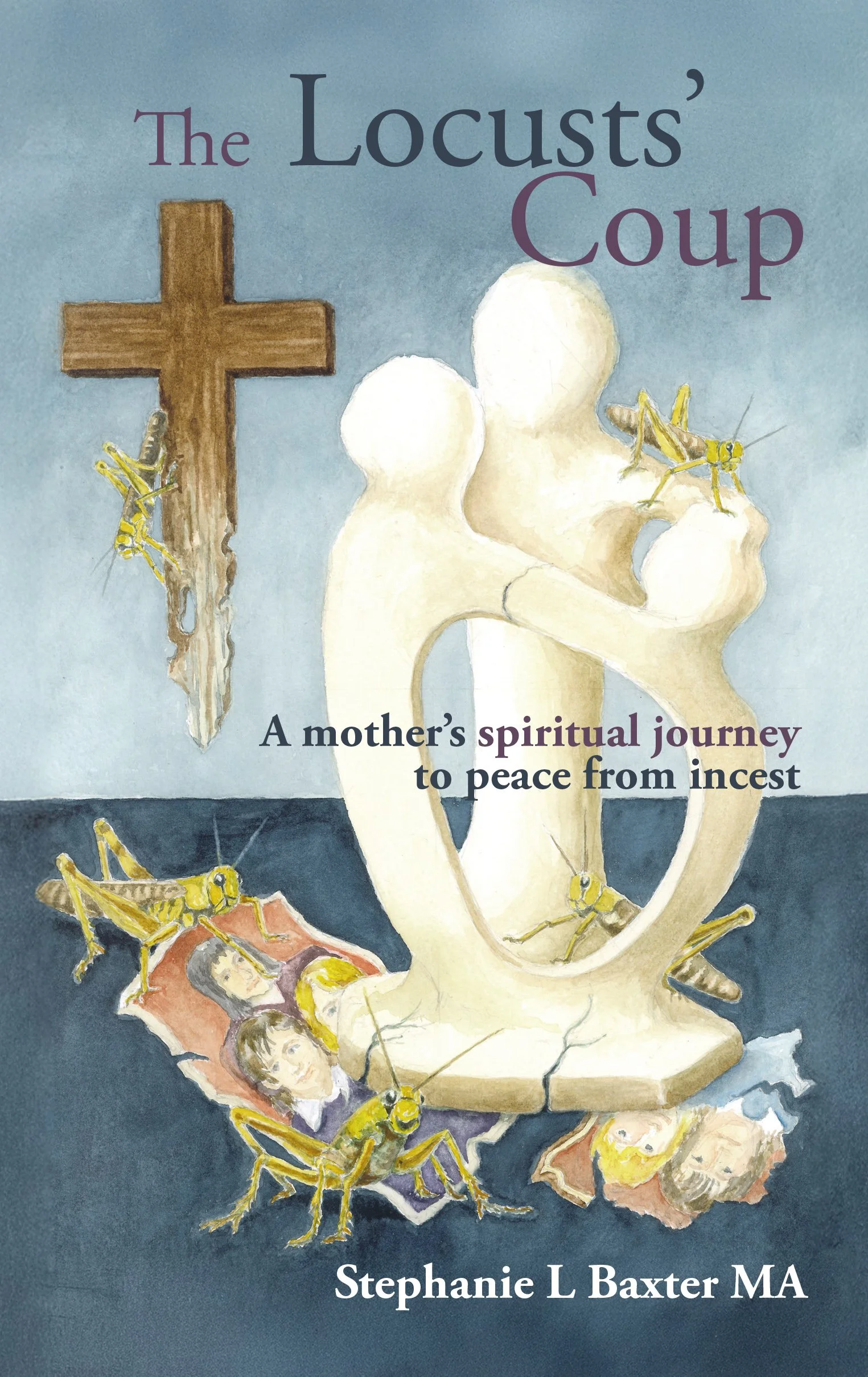
The Prestigious International Hope Book Awards proudly recognizes Stephanie L. Baxter as the winner of the Turning Pain into Purpose Award for her deeply moving and courageous book, The Locusts’ Coup: A Mother’s Spiritual Journey to Peace from Incest.
Stephanie’s story begins with a disclosure that no mother is ever prepared to hear. Her five-year-old daughter reveals a devastating betrayal committed by someone who should have protected her. In that moment, the life Stephanie knew was shattered, and she was forced to step into the unbearable roles of protector, advocate, witness, and wounded mother.
With remarkable emotional honesty, Stephanie describes the fear that rose inside her as she listened to her daughter speak. She writes:
“Her quick-firing words stung to the depths of my being, and I feared what more she had to say.”
This moment is only the beginning of a journey that would span almost three decades.
The Emotional Depths of Her Journey
The painful moments in The Locusts’ Coup reach far beyond the original act of abuse. Stephanie confronts the guilt of having trusted her former husband with their daughters, the heartbreak of watching her child’s innocence disappear, and the crushing realization that one person’s actions had wounded an entire family.
She carries her daughter’s anger and blame, while privately questioning whether she failed as a mother. She faces police investigations, social-service assessments, family judgment, financial hardship, depression, rejection, and the exhausting responsibility of raising two children while trying to keep her own heart from breaking.
One of the book’s most emotional moments occurs when Stephanie reaches such a place of despair that she stands at the edge, contemplating whether surrendering her life would end the pain. The darkness offers her an illusion of peace, yet something stronger within her refuses to let despair have the final word. She chooses to step away from the edge and continue fighting for her daughters.
Her struggles are intensified by the wounds of her own childhood. Stephanie reveals that she, too, experienced sexual abuse and grew up surrounded by deprivation, loneliness, damaged boundaries, and a desperate desire to feel loved. The trauma suffered by her daughter therefore reopens wounds Stephanie had never fully healed.
The book honestly portrays the difficult years that followed. Relationships became strained; mother and daughter struggled to understand one another, and the family endured what Stephanie calls the “cave years," a season of emotional isolation when each person attempted to survive the trauma in a different way.
These painful chapters are not easy to read, but they are essential. Stephanie refuses to romanticize recovery or pretends that healing happened immediately. Her story shows that surviving trauma can involve anger, setbacks, misunderstandings, broken relationships, unanswered questions, and years of carrying emotions that others cannot see.
The Turning Point Toward Healing
Amid the darkness, Stephanie continually returns to a prophetic promise she received through her Christian faith:
“Trust in Me, abide in Me, and I will give you back tenfold what the locusts have taken.”
This promise becomes the fragile thread of hope she holds when everything else appears lost. Although she questions God and struggles to understand why such suffering was permitted, she continues searching for meaning, restoration, and peace.
Slowly, the story begins to change. Stephanie returns to education, earns her degrees, serves her community, builds a loving marriage, and watches her daughters grow into remarkable young women. These victories do not erase what happened, but they demonstrate that trauma did not have the authority to determine the final outcome of their lives.
A significant part of Stephanie’s healing comes through confronting forgiveness. She does not portray forgiveness as excusing the crime, removing accountability, forgetting what happened, or allowing an unsafe person to return. Instead, she describes it as a deeply personal decision to release the anger and pain that continued to control her life.
Her journey eventually requires her to forgive not only the person responsible for the harm, but also herself. She begins to understand that she was not responsible for another person’s criminal choices and that carrying guilt could not change the past or heal her daughters.
Through faith, truth, professional understanding, compassionate relationships, and years of personal reflection, Stephanie reaches a place of peace she once believed was impossible.
She writes:
“The lie of abuse is broken and the long shadow it cast is lit up by truth, love and faith.”
This statement captures the heart of the entire book. The family’s story is not defined solely by what was taken from them, but by what they fought to reclaim: their voices, relationships, identities, faith, hope, and right to experience joy again.
Turning Pain into Purpose
What makes The Locusts’ Coup especially deserving of the Turning Pain into Purpose Award is Stephanie’s decision to use her most painful experiences to help others. She writes:
“Sharing my story with you gives all the pain and struggle a degree of purpose.”
Stephanie transforms a story once surrounded by silence and shame into a compassionate testimony for survivors, parents, caregivers, families, churches, and communities affected by sexual abuse. She speaks openly about the wider impact of incest and reminds readers that abuse does not wound only the immediate survivor; its consequences can touch every person who loves that child.
The book also reaches beyond personal testimony. Stephanie includes research, statistics, survivor-support resources, and information about offender treatment and rehabilitation. These elements give the book educational and practical value while encouraging those suffering in silence to seek safe and appropriate support.
Her purpose is not merely to tell readers what happened. It is to assure them that they are not alone, that their pain deserves to be acknowledged, and that healing, although often long and difficult, remains possible.
Literary Excellence
Stephanie’s Literary Excellence score of 96/100 places The Locusts’ Coup within PIHBA’s highest level: Literary Excellence with Distinction.
Her narrative voice is sincere, vulnerable, and emotionally compelling. The book’s structure carries the reader from disclosure and devastation through the author’s earlier wounds, the family’s long years of struggle, and finally toward healing, freedom, and renewed purpose.
The recurring imagery of locusts, storms, ashes, darkness, and restored color provides a meaningful symbolic foundation. The locusts represent the silent destruction caused by abuse, while the return of color symbolizes the restoration of life, identity, faith, and hope.
The book’s emotional strength comes from Stephanie’s willingness to reveal both her courage and her vulnerability. She does not present herself as a flawless mother or an untouched hero. She allows readers to see her fear, anger, guilt, spiritual questions, mistakes, and moments of despair. That openness gives the memoir its authenticity and power.
Final Recognition
The Locusts’ Coup is a courageous testimony about what happens after a family’s world is shattered, and what becomes possible when darkness is confronted with truth.
Stephanie L. Baxter has taken one of the most painful chapters of her life and transformed it into a ministry of compassion, education, healing, and hope. Her story honors the survivors whose voices have been silenced, the parents who carry invisible guilt, and the families still searching for a path forward.
The Prestigious International Hope Book Awards proudly congratulates Stephanie L. Baxter on becoming the winner of the Turning Pain into Purpose Award.
Her story reminds us that healing does not require us to deny our scars. Sometimes those scars become evidence that pain entered our lives, but it did not receive permission to write the ending.